
HEALTH AND SAFETY AT CAMP
Your Child’s Health and Safety is Our Priority
Our commitment to safety extends beyond protocols—it's embedded in our culture. Our staff understand their role in maintaining a safe community, and we prepare and train for various scenarios while providing enriching outdoor experiences for our campers.
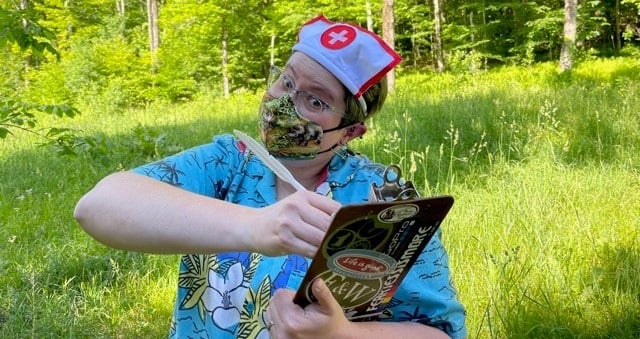
Farm & Wilderness has a team of licensed nurses and trained medical support staff who are on-campus and on-call throughout the summer. We have four on-campus health centers that assist campers and staff with health coaching, basic first aid, tick removal, and provide support for acute illnesses like strep throat, ear infections, skin conditions/rashes, or gastrointestinal upset and chronic conditions like asthma.
We have established relationships with local hospitals and medical facilities should a camper need to be seen at an off-campus clinic or ER. The vast majority of our summer staff are trained in Wilderness First Aid or Wilderness First Responder/EMT, CPR/AED, and our waterfront is staffed with certified lifeguards trained in first aid and waterfront safety.
As part of our commitment to the whole health, we also have behavioral health specialists available.
More detail and information can be found via Family Handbooks
PRIOR TO CAMP: WHAT WE NEED FROM YOU
Physical Exam Form & Immunization Records
Your child’s physical exam form and immunization records from their primary physician is a necessary part of the application to camp. Please ensure that you upload a copy of the information outlined in the Physical Exam Form, completed by your camper's physician, on our registration portal prior to arriving at camp. You may use our form to submit information or substitute a form your physician provides to you, provided that form covers the same information. This form must be submitted anew every year, and all campers must have had a physical exam within one year of the start of their camp session.
Immunization records, once dates have been input into their CampDoc Health Profile, will remain in their profile from year to year to review and confirm, when you may also enter any boosters they have since received.
We require all campers are up to date with the current schedule of regular childhood vaccines as per school/childcare guidelines set forth by the VT Department of Health. (last updated by VT 2022) Please reach out to admissions directly if you require more information about the processes for medical or religious exemptions or amended/alternative/catch-up immunization schedules, all of which are reviewed on a case-by-case basis.
WHAT YOU NEED TO KNOW
Please reference the Get Ready Resource Page for more detail and documents (including family handbooks).
Food & Allergies
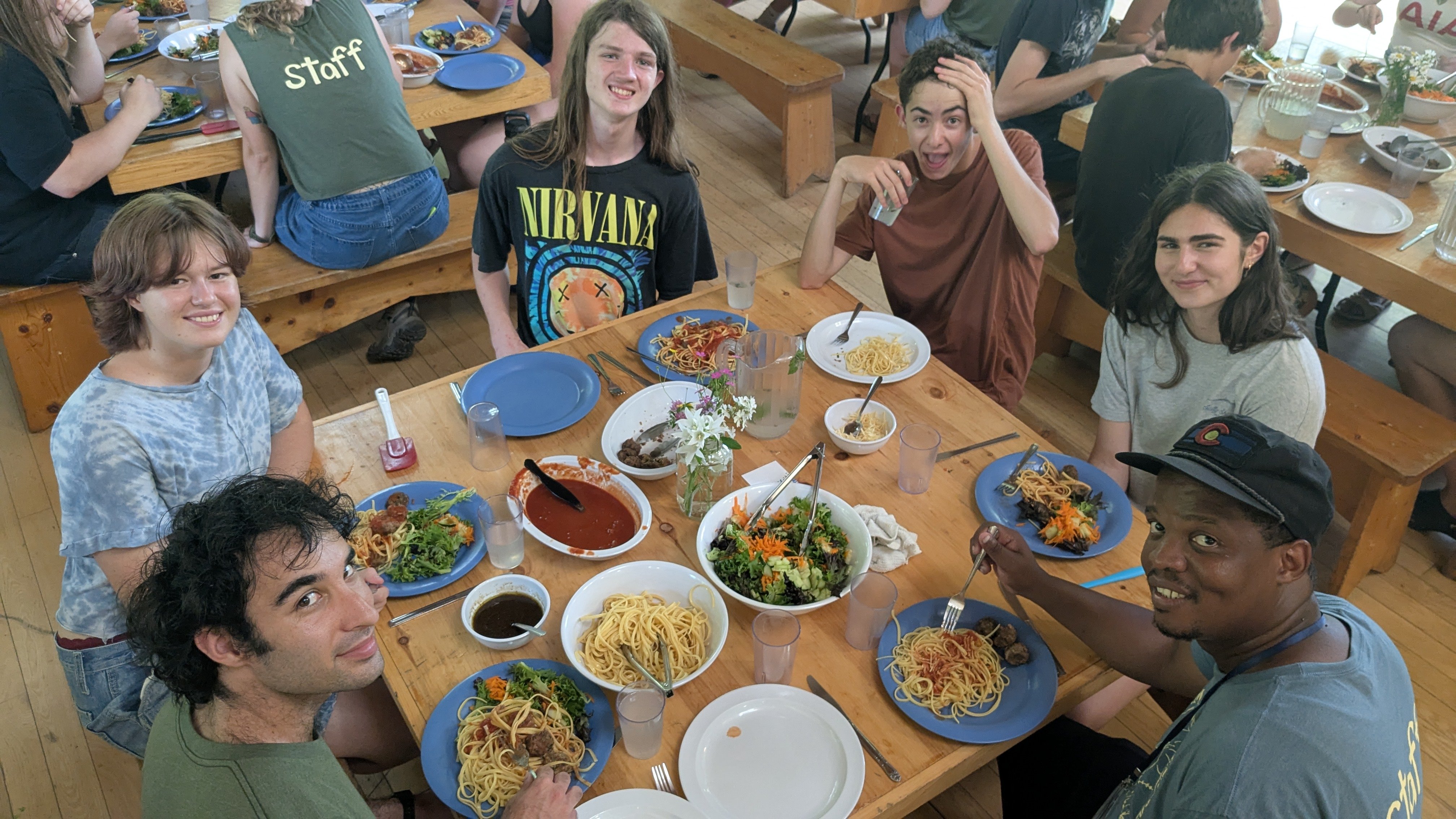
We are proud of the delicious, nutritious meals and snacks that we serve. Whenever possible, our campers participate in various aspects of meal production by working in gardens, collecting eggs, learning to cook, cleaning up and other activities. We provide healthy, high quality food and regularly accommodate a variety of dietary needs such as omnivores, vegetarians, vegans, and gluten-free diets. We are also able to provide for campers with allergies to such things as peanuts, eggs, etc, and are not a nut-free facility. Every camper has access to healthy food choices that are safe for them to eat, though dietary restrictions may reduce the number of options available to them at each meal, or during trips, cookouts and other special events, especially in the case of multiple allergies/dietary restrictions. We do our best to accommodate a wide range of eating habits but cannot guarantee that all preferences/pickiness can be accommodated. We ask questions about your camper’s diet during the registration process, so our staff can be informed and prepared to nourish our camp communities!
Medications
Please be aware that Farm & Wilderness can only administer prescription drugs in accordance with direction from licensed medical personnel. Farm & Wilderness must have a doctor’s written direction on the original labeled bottle of medicine. Over the counter (OTC) medication must be given to camp staff in the medication's original packaging. Camper parent/guardians must supply the camp with enough medicine for the time the camper attends Farm & Wilderness or make arrangements to ensure that the prescription can be refilled at camp. Some medications may require approval from the prescribing doctor to ensure the camper can safely participate in camp. It is not recommended to disrupt a camper’s medication schedule during the time they are at camp.
Physical and Behavioral
Campers at Farm & Wilderness must be able to move daily on foot over uneven and natural terrain. They must be able to sleep outside in rustic wooden or canvas structures with other campers and staff. They must be able to lift and carry a backpack for hiking and trips, as well as eat provided meals and hydrate regularly. All campers must follow directions and participate willingly in camp activities, daily chores and community living activities. Campers must refrain from violence, verbal assault, bullying or any similar behavior. See more information in our handbooks for further information about physical and behavioral expectations for your camper.
Ticks
At Farm & Wilderness, we take ticks very seriously. During the summer, we do regular tick checks.
Here also is a link to our staff protocol for Tick Checks.
Here is some basic information about ticks and tick borne illnesses in the U.S.
Here is some basic information on Lyme disease – the most common of the tick-borne illnesses in the U.S.
Emergency Preparedness
Trained Leadership & Staff
- All camps have staff trained to respond to emergencies. Our trained staff includes a combination of Wilderness First Aid (WFA), Wilderness First Responders (WFR), Emergency Medical Technicians (EMT) and licensed Nurses.
- Our leadership team includes staff trained in emergency management who serve as first responders in their communities
- We have an emergency pager connected to a network of Farm & Wilderness responders, staffed 24/7 throughout the summer.
Weather & Natural Disaster Preparedness
Infrastructure Improvements
Following Hurricane Irene in 2011 and the floods of 2023, we've made substantial investments in emergency preparedness:
- Backup Power: Generators at all kitchen facilities ensure we can continue operations
- Emergency Food Storage Plan: Dry goods storage for continuity during power outages
- Communications: Starlink satellite internet ensures we maintain contact with families and emergency services
- Road Maintenance: On-site equipment and upgraded culverts/drainage systems
- Fuel Reserves: Adequate supplies to run generators and equipment
Weather Monitoring & Response
- Daily weather monitoring including Air quality monitoring using EPA standards
- Program adaptation plans at each camp for weather disruptions
- Heat index tracking and activity modifications
- Cooling stations and increased hydration protocols
- Designated shelter locations at each camp
- Indoor activity alternatives during extreme conditions
- Clear protocols for severe weather including lightning, high winds, air quality, and extreme temperatures.
Trip Safety
Established safety procedures include:
- Trained staff with wilderness first aid certifications
- Detailed trip plans filed with camp leadership
- Emergency communication and evacuation / change of plan procedures
- Partnerships with State and Federal land agencies.
Working with Local Communities
Farm & Wilderness maintains strong relationships with:
- Plymouth, Ludlow and Woodstock emergency services.
- Vermont State Police.
- Regional hospitals and medical centers
- Town emergency management coordinators
American Camping Association Accredited:
- Our camps are accredited through the American Camping Association (ACA), the industry’s national association charged with ensuring high quality camp experiences.
- To receive ACA accreditation, our programs must successfully meet up to 300 specific standards.
- The ACA collaborates with experts from the American Academy of Pediatrics, the American Red Cross, and other youth-serving agencies to ensure their camp standards reflect the most up-to-date, research-based practices.