




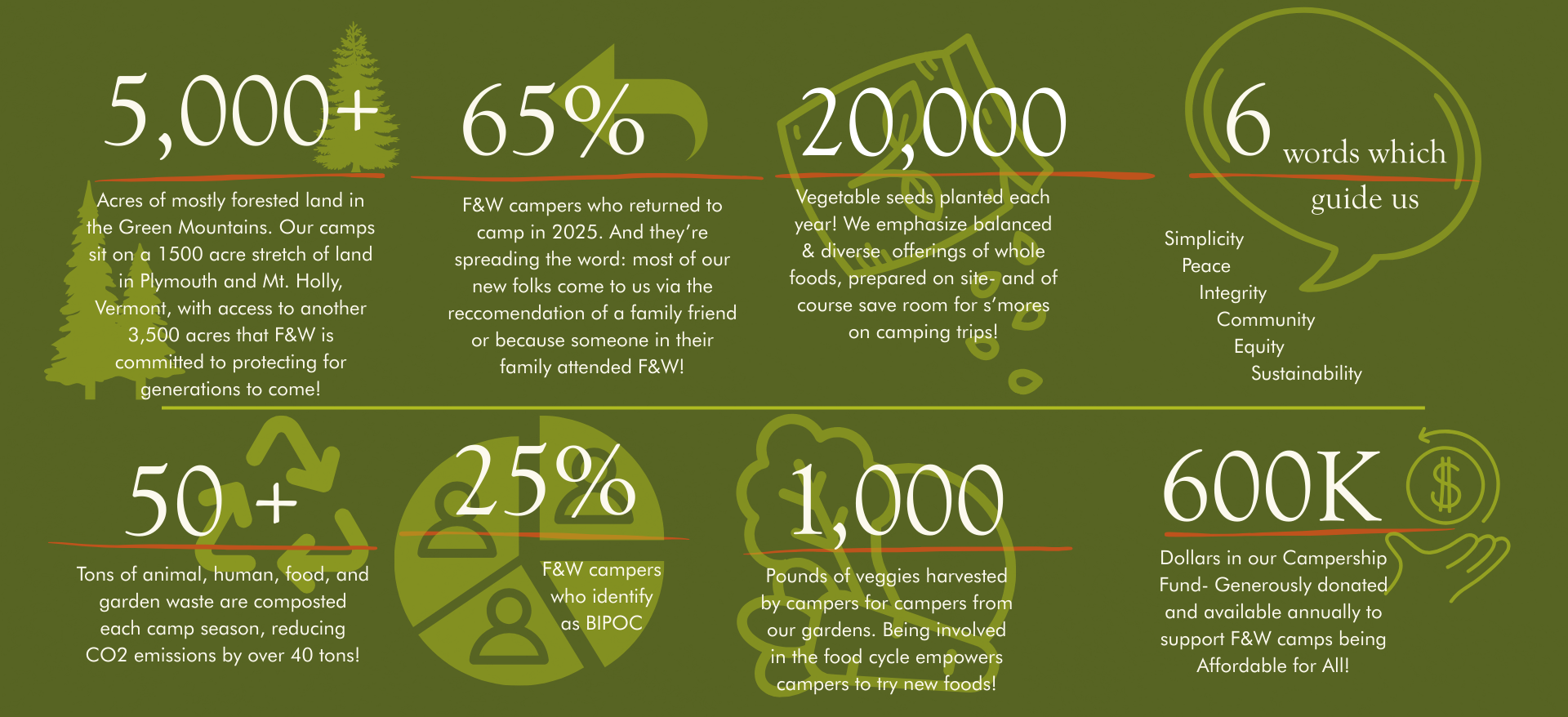
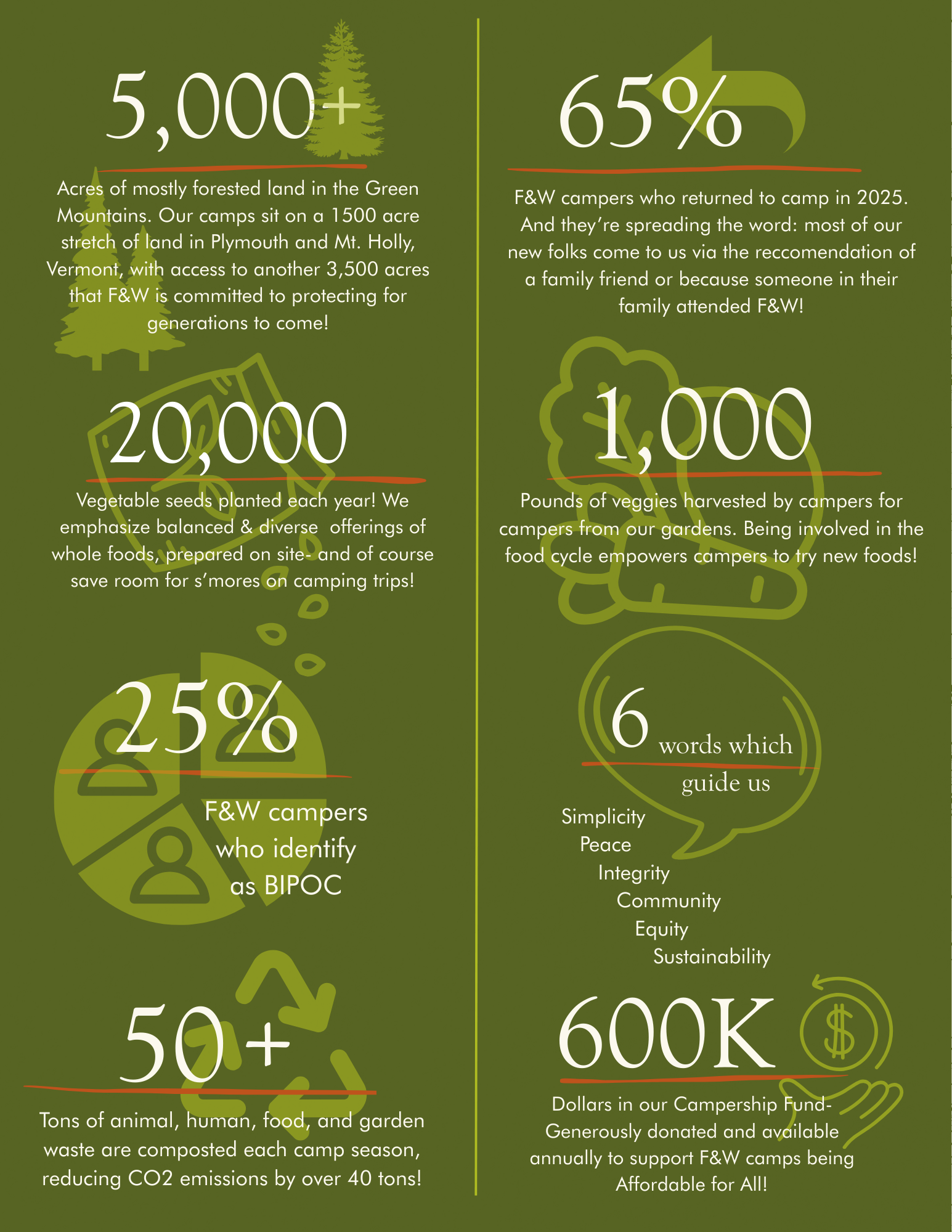
Farm & Wilderness By The Numbers
F&W Blogs
Happy 43rd Birthday Barn Day Camp
by Helen Richards-Peelle
It is hard to believe the Barn Day Camp(BDC) is turning 43 years old this year. In 1983 Ridge Satterthwaite was asked by the board to explore starting a new camp at Farm & Wilderness. That was the seed for the creation of the BDC and here it is 43 years later flourishing and servicing not only a F&W camp experience for the greater Vermont region but also for many other families who plan their summer vacation around sending their young child to the BDC!
Working mostly with Len Cadwallader, he and I visited many sites to determine the best location. The newly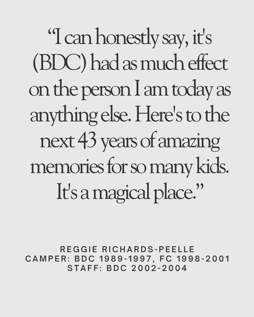 designed Woodward reservoir dam and lower barns created the perfect location for this new camp. I spent the winter of 1983 (while pregnant with my first child-Katie) designing and creating the structure of the day camp. The first summer was just the newly designed site and program for children of staff and a sprinkling of outside children. We had only 8-12 children for each 2 week session which at that time we had 4 sessions. This way we could work out the kinks to be ready to fully open for the summer of 1984. And open we did with enrollment shooting up very quickly and some sessions to full capacity.
I directed the camp for 20 years and stepped down when I took my first job as a school administrator. All three of my children, Katie, Reggie and Lilly grew up at the BDC and later went on to Indian Brook(Firefly Song), Flying Cloud, Tamarack Farm and as Counselors.
The Barn Day Camp and F&W experience shaped their lives as well as mine as I went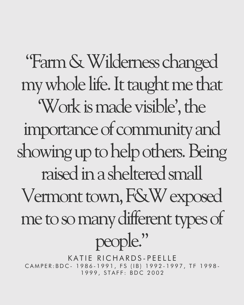 on to lead three schools in Vermont. To this day the kids talk about their experience and what it has meant to their lives as contributing adults, how they see the world and the care and love they give to causes in which they care deeply. Their lives were certainly influenced by their camp experience, while their mother was busy creating and directly the newest Farm & Wilderness camp.
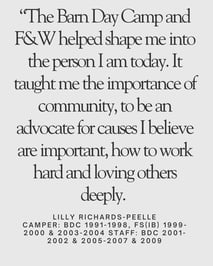 As a Vermont school leader, I brought the values I learned at Farm & Wilderness to my job. Tolerance and acceptance of others, working hard to achieve a goal, collaborating with others and striving for a caring, thoughtful inclusive school community for children to thrive and grow.
To know that the Barn continues to thrive and grow with the basic structures created 43 years ago is heartwarming. While I have been away for 23 years, many children in my community have attended the Barn and report positive experiences and look forward to returning. The magic continues. So happy, happy 43rd Birthday Barn Day Camp, may you continue for many more years.
Helen Richards-Peelle
BDC director 1983-2003
F&W Crew Co-Director for the off season(1981-84)
Camp Office Register for all the camps 1984-89
Designed and Co-director of School programs at Farm & Wilderness 1982-84
Three Weeks: Long Enough to Take Root
Whether they were here a few days ago or many years ago, Farm & Wilderness campers remain connected to this place because of the community.
It’s a community that calls you in — but it doesn’t exist on your first day of camp. It’s not fully grown after a week. Building community takes time. Our alumni recall decades ago when many would spend the whole summer at camp. Nowadays, the three-week session length for most of our overnight programs is part of the design of Farm & Wilderness (F&W) camps, and we believe that families planning their summers should choose it intentionally, not as a compromise.
We also believe that intentional choice shouldn't be limited by what a family can afford. Through our Affordable for All program, F&W strives to ensure camp tuition is never the reason a child misses out on this experience. Affordable for All is one of the most important ways we live out our values.
With each day together, we see campers grow more confident, find their voice, and learn to communicate. After three weeks, they’re fully at a place where real community is happening.
That’s not only something we’ve seen summer after summer; it’s also well supported by research.
.jpg?width=1619&height=1080&name=A77A3969%20(Large).jpg)
The Research Behind our Design
The Wallace Foundation’s rigorous longitudinal study of summer programs (Every Summer Counts, conducted by the RAND Corporation) provides clear evidence of the relationship between time and outcomes. The study tracked outcomes in academic achievement and social-emotional skills. Its findings show that the students who benefited most were those who attended a summer program for 20 or more days. Our three-week sessions are right at that sweet spot.
Three weeks also gives each cohort time to learn to work together. Tuckman’s model of group development describes the cycle we’ve observed across ages. Camp groups move through the stages of forming, storming, norming, and performing, and a spirit of cooperation emerges. Campers gain confidence in themselves and their peers as they learn to voice their opinions and resolve disagreements. Having rebuilt their group structure with trust and shared norms, they are stronger together.
Personal Growth Through Community-Mindedness
When we published our 2024 Impact Report, Decoding the Magic of Camp, we learned a lot about the impact of being part of a community. When a camper has settled in — found their footing, learned the rhythms of the day, started to know the people around them — something shifts. Community-mindedness isn’t the backdrop to our program. It is our program. Shared chores, communal meals, benches and barns built together, and norms negotiated collectively. In the words of a camper, “I am proud of myself for working hard and being cooperative with chores in my community service because it feels really good to help others.” Three weeks matters in the aggregate, and it also matters for each individual child.
A camper experiencing homesickness in a short program can simply wait out the discomfort. A camper who knows they have three weeks ahead of them reaches a different reckoning. Their resistance to joining in and having fun crumbles. The length of the session itself becomes a developmental tool that makes it easier for them to adapt. Our camp surveys have shown that navigating homesickness and learning to stay away from family are genuine sources of pride and personal growth. One 2023 Timberlake parent put it this way: "Having faced his fears and stuck with camp for three weeks, he sees he can do hard things and simultaneously hold sad and happy feelings."
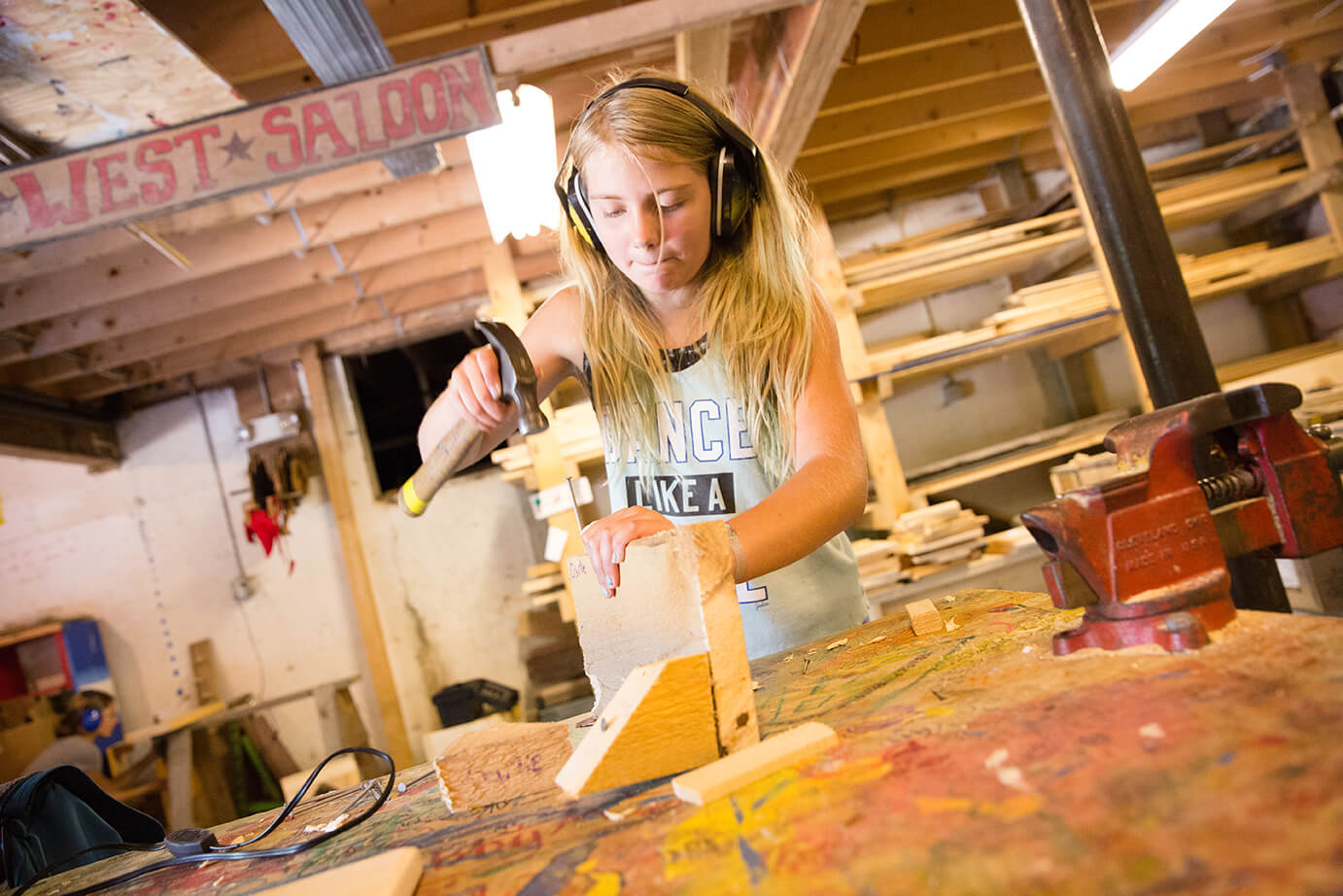
Campers aren’t just exposed to the skills they need to build a fire, milk a goat, navigate with a compass, or perform on stage. They master these skills. Our programs provide the time, space, and support for the sustained effort from which campers gain self-efficacy. F&W camps are designed with a planned progression of skills during each three-week session and extending across multiple summers. Celebrating those achievements, whether in big group gatherings or daily appreciation rituals, is essential to community-building at F&W. Campers learn to value communal efforts and recognize their unique contributions within their cabin, lodge, trip group, or camp.
For many kids, F&W camps are the first time they are without the social constructs and technology they rely on at home and school. Not just for a couple of hours or days, but for three weeks. Our focus on person-to-person interaction is a deliberate strategy to build community-mindedness. As Jonathan Haidt describes in The Anxious Generation, “attunement (person to person interaction) forms the foundation for later emotional regulation … face to face, physical interactions and rituals are a deep ancient and underappreciated part of human evolution. Adults enjoy them, and children need them for healthy development” (Haidt, 2024).
Week 3 isn’t the End, Or the Only Option at F&W
For some campers, three weeks isn't enough. Decades ago, spending an entire summer at F&W was the norm. Today, with so many competing obligations, it's less common, but it still happens, and when it does, the transformation is something else entirely. The depth of community that forms over a full summer is hard to describe and impossible to forget. If your child is craving a completely unplugged summer — a real one — we encourage you to try it.
For families looking for a different kind of introduction to F&W, we've also launched something new: The Clearing, a two-week off-grid program for ages 11–14. While we deeply believe in the value of three week sessions, we recognize that for some families, committing the time and money necessary for a three week experience is out of reach. In order to offer access to the Farm & Wilderness experience to those families, we've designed a two week program that goes deep on skill-building, community connection, and relief from technology, even down to mirrors and flashlights.
Located on more than 5,000 acres of undeveloped Vermont woodland, The Clearing trades clocks and screens for fire-making, hide tanning, backcountry cooking, ceremony, and community. Campers live in canvas lodges, tend fires, cook their own meals, and culminate the session with Earth Walk — an overnight in the woods that draws on everything they've learned. Two weeks isn't three, but The Clearing is designed for depth. By the time campers leave, they know what they're capable of.
Long-term, for campers and the overall F&W community, accountability to shared norms creates deep trust, and F&W friendships are unlike those formed anyplace else as campers carry their friendships out into the world.
Campers also carry F&W values home in other ways. Families and school teachers consistently report campers becoming more responsible, accountable, and eager to help. That community-mindedness is more important than ever when faced with strong headwinds like political polarization and social media.
F&W has long believed that the benefits multiply when campers return, and research confirms this. In the Wallace Foundation study, students who attended two consecutive summers showed greater gains in both math and language arts than those who attended just one. F&W's programs are designed for a sustained relationship built summer by summer, with a developmental progression from Barn Day Camp for children as young as 4 all the way through Tamarack Farm for teenagers up to age 17. Each returning summer builds on the last.
Fostering intentional and cooperative community is among our most meaningful work. Honoring our Quaker roots, F&W is committed to mutual obligations and relationships, sharing, and inclusivity.
The research backs up what we've seen firsthand: three weeks is the point at which real growth and real community become possible.
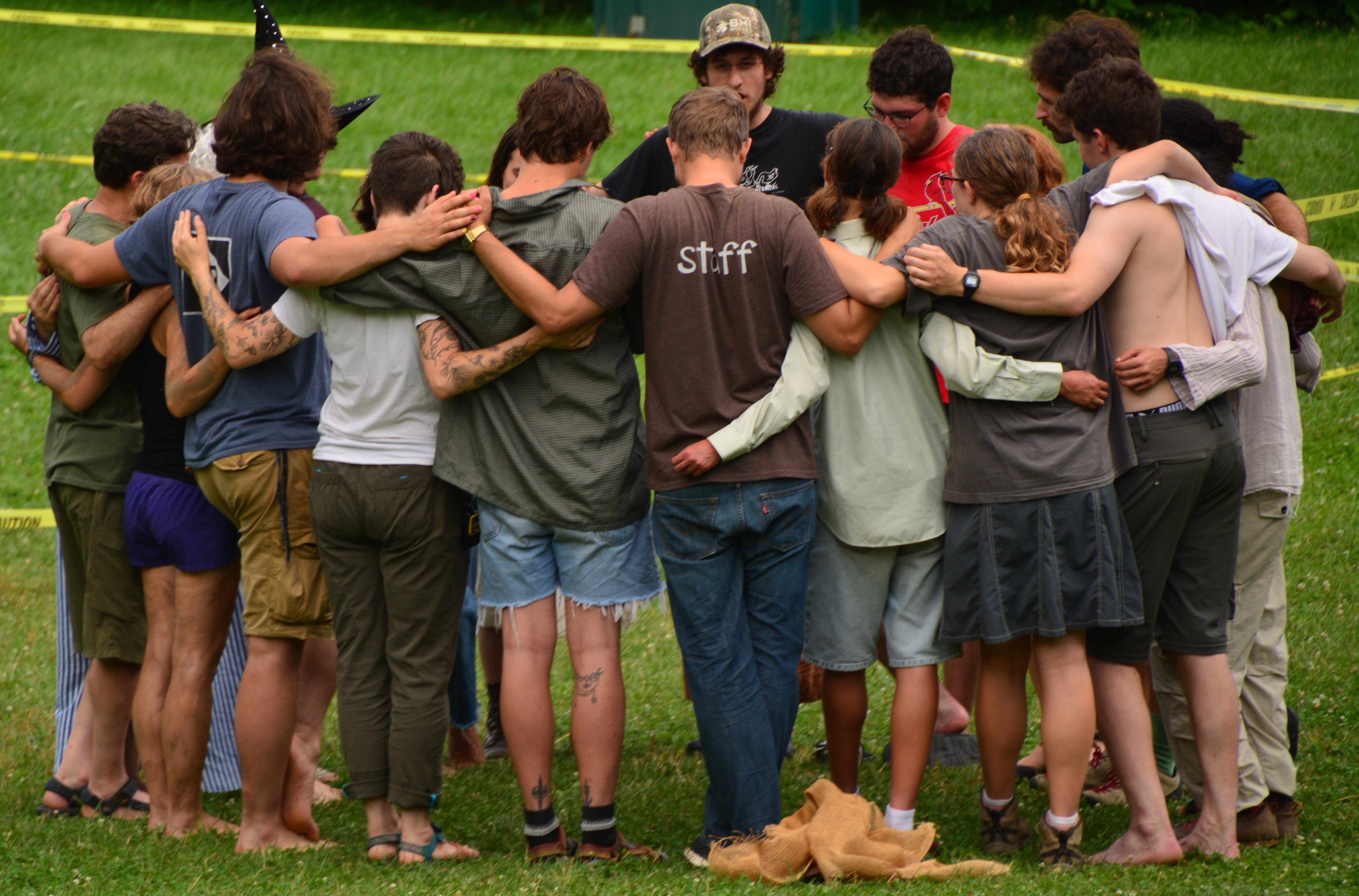
Our summer staff arrived a little over a week ago, and that truly signals the start of the best season here in the Plymouth Valley. Staff travelled from far and wide (South Africa, Mexico, Spain, Texas, Arkansas, the West Coast, and of course lots of folks from the typical F&W strongholds around New England), and have spent the last week getting settled and beginning their training.
-1.jpg?width=326&height=245&name=Image%20(1)-1.jpg) After a few days spent getting settled at their own camps (getting to know each other, doing a little community building, learning some of our routines), staff begin their "Skills Week" trainings, where they learn the specifics of their activity or responsibility areas (e.g., Barns and Gardens, Work Projects, Outdoor Living Skills). The days are full and staff from across all of the F&W camps get to work together. Part of our training includes each staff member learning how to lesson plan and work with campers in their activity areas.
After a few days spent getting settled at their own camps (getting to know each other, doing a little community building, learning some of our routines), staff begin their "Skills Week" trainings, where they learn the specifics of their activity or responsibility areas (e.g., Barns and Gardens, Work Projects, Outdoor Living Skills). The days are full and staff from across all of the F&W camps get to work together. Part of our training includes each staff member learning how to lesson plan and work with campers in their activity areas.
Our Creative Arts folks made some very cool masks out of natural materials, seen above. Our OLS staff worked on building fires, including with a bow drill; how to safely use axes; and map and compass skills (and they successfully made it back from their "Get Lost Hike").
.jpg?width=250&height=334&name=Image%20(5).jpg) Conservation skills week session with FWC’s Conservation Coordinator Elisabeth. Folks obtained a greater sense of place in the landscape, sharpened their observation skills, and brainstormed activities to help campers develop a strong connection with the natural world. Highlights included invasive plant management techniques, stream ecology, soil science, forestry, and tree identification.
Conservation skills week session with FWC’s Conservation Coordinator Elisabeth. Folks obtained a greater sense of place in the landscape, sharpened their observation skills, and brainstormed activities to help campers develop a strong connection with the natural world. Highlights included invasive plant management techniques, stream ecology, soil science, forestry, and tree identification.We also take this time to focus on safety training and certifications, and we have added 5 new Water Safety Instructors, 21 new lifeguards and will have over 100 new Wilderness First Aid trained staff after this week.
-2.jpg?width=247&height=330&name=Image%20(2)-2.jpg) During this time everyone has been eating together at Tamarack Farm. Just as staff in activity areas have been in sessions in their area, cooks have also been doing their own specific cooks training. They have been meeting with health inspectors, setting up kitchens, and practicing their skills, alongside preparing each camp’s individual kitchen.
During this time everyone has been eating together at Tamarack Farm. Just as staff in activity areas have been in sessions in their area, cooks have also been doing their own specific cooks training. They have been meeting with health inspectors, setting up kitchens, and practicing their skills, alongside preparing each camp’s individual kitchen.
On Sunday night, (after a much deserved day off for all staff!), everyone ate their first meal at their own camps, as we head into the next portion of staff training with lots of focus around how to work with kids, and building community at our individual camps. It is incredibly exciting to see all the activity and to anticipate camper arrival in just about a week.
