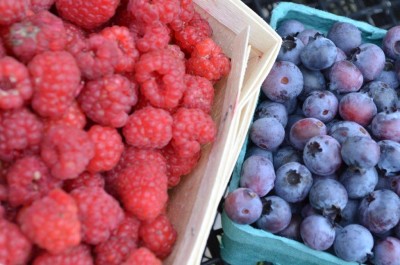
What went into those cornflakes that you ate breakfast? Those muffins? That yogurt? How does the food you eat end up on your plate? These are the types of questions we began to ask ourselves Monday night as we kicked off food week; a week of activism and celebration here at Tamarack Farm. From global-warming, to the War on Drugs, to racism, to world hunger, we delved into a whole range of social and environmental issues, expanding beyond those that simply touch us here at camp.
On Thursday afternoon, Carol Browner— the former administrator of the Environmental Protection Agency under former President Bill Clinton and former Assistant to the President for Energy and Climate Change for President Barack Obama— came to talk to us about her work in environmental policy. She spoke with frankness about the staggering realities of global warming, but also maintained a certain degree of optimism about the impact that policy has had and can still have on our situation. We couldn’t help but be inspired by her prolific career, and also by her closing message: each of us can do something to give back the world, whether, like her, at the large, political level, or at the small, local level.
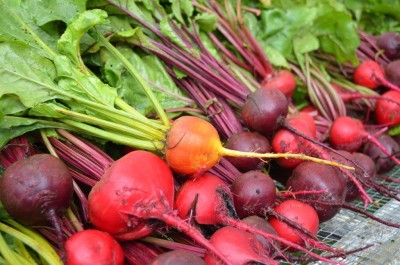
The following morning, half the camp participated in our Chicken Harvest while the other half harvested a whole slew beets, carrots, cabbage, onions, lettuce and more from our garden.
At Chicken Harvest, pairs of campers got the opportunity to experience each step of the chicken-meat processing. They first grabbed a live chicken by its feet and brought it over to a chopping block to be decapitated. After they scalded, plucked feathers and gutted the chickens, they rinsed them, placed them on ice, and then took them to be butchered.
Throughout the harvest, campers and counselors maintained a calm-and-serious attitude, aware that these animals had given their lives for us to eat. Every one of us have had had the opportunity to feed and water these chickens and, after processing, marinating and barbecuing them, before they would end up on our dinner plate. It was a first-hand look at ethical meat processing, a true learning experience that would change the way we think about meat.
By Friday evening, a group of campers and staff had set-up a beautiful display of freshly harvested food in our dining-hall. But, before we got to feast, we took time to obtain a glimpse of what hunger on a world scale looks like. At the beginning of our “Foods from Around the World” dinner, each person was handed a number designating where in the dining-hall they were to sit. The eight or so campers in Group 1 found themselves at stylishly set table where they were served several courses comprised of hors-d’oeuvres, green salad, asparagus, rice, and steak. Meanwhile, the fifteen or so people in Group 2 were seated nearby at a simple table where they were served beans and rice. The remaining 30 or so staff and campers were directed to the floor where they were simply handed a bowl of white rice to share among them all. The few people served meat, veggies and starch compared to the large number of people on the floor eating only rice represented the relatively large portion of the world’s population who does not have access to diverse and nutritious food. Ultimately, all of us were given one such delicious and nutritious meal, but not before we had a first-hand experience of what food injustice actually tastes like.
After Friday night’s dinner, we couldn’t help but recognize how lucky we are that, far from a food desert, we’re living among a bountiful food garden. Saturday, we got to celebrate that garden by eating food we had almost solely harvested from our campus. Anything that didn’t come from our garden or farm, such as salt and vinegar, we “bartered” for by performing poems, jokes, songs and skits. For breakfast, we had maple-currant scones with homemade butter and strawberry jam along, homemade yogurt with blueberry sauce and chocolate milk from our cows. For lunch, we had a salad bar which included bean, egg and cucumber salads as well as flat bread with homemade ricotta spread. Dinner featured our chickens as well as a cabbage salad, a lettuce salad, and a roasted roots salad with beets, potatoes, carrots and onions.
Dinner was served in our freshly decorated garden and the event ran late into the evening before culminating with a desert of homemade ice cream and roasted apples from our nearby orchard. It was a sweet end to a very full and fun week, though we knew we would have an even fuller last week ahead.
For now, though, we were set on savoring the moments we had left. Unwilling to leave the garden, many of us even slept outside and some even saw their first shooting star.
by Erica Seltzer-Schultz, TF Staff